
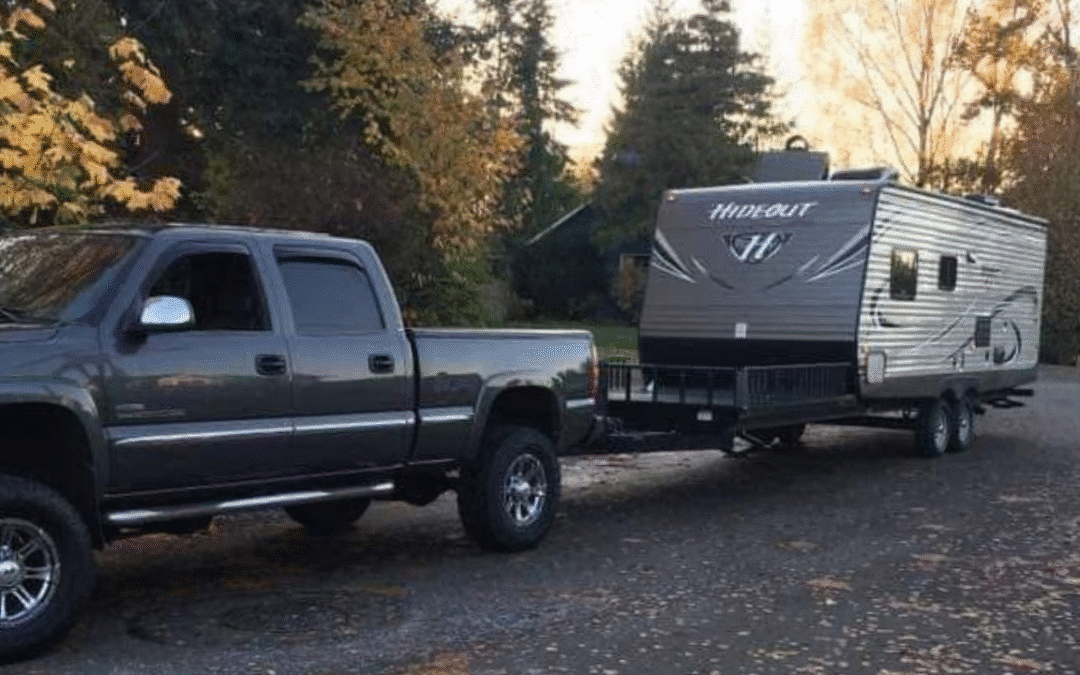
We’re all soaking up the last weeks of summer here in the PNW, and for some people, that means hitting the road for a camping trip near Mount Rainier or further up the coast. As the weather slowly cools down, it’s the perfect time to get outside and enjoy the beauty that’s all around us.
If you’re getting ready for your next camping trip or simply want an easier way to keep your RV powered at home, installing the right RV outlet is crucial. Don’t assume you can plug your camper into any outdoor outlet with an adapter. That’s often not the safest, or most effective, solution.
Here’s what you should know before installing an RV outlet at your home.
Isn’t a Standard Outdoor Outlet Enough?
A typical outdoor household outlet is designed for everyday items like power tools, holiday lights, or lawn equipment. While adapters exist that allow you to connect an RV to a standard outlet, they’re really intended for very limited use.
If you’re trying to run your air conditioner, microwave, water heater, or multiple appliances inside your RV, a regular outlet won’t provide enough power. At best, you’ll be limited in what you can use. At worst, you could overload the circuit or damage equipment.
If you plan to store your RV at home or use it regularly before trips, installing a dedicated RV outlet is usually the better long-term solution.
Not Every RV Uses the Same Electrical Service
One of the first things an electrician will determine is what type of service your RV requires.
The two most common options are:
- 30-amp service: Common on many travel trailers and smaller motorhomes. These use a three-prong receptacle that supplies 120 volts.
- 50-amp service: Typically found on larger fifth wheels and Class A motorhomes. These use a four-prong receptacle and provide significantly more available power.
Installing the wrong outlet can create compatibility issues or prevent your RV from operating properly, so it’s important to match the outlet to your specific camper.
What an RV Outlet Installation Involves
All you have to do is replace an existing receptacle… right?
In many cases, it’s more involved than that. The installation typically includes:
- Evaluating your home’s electrical panel to ensure it has enough capacity
- Installing a dedicated circuit breaker
- Running appropriately sized wiring from the panel to the outlet location
- Mounting a weather-resistant outdoor receptacle in a convenient location
- Testing the circuit to verify that it operates safely
Every home is a little different. The distance from your electrical panel to your parking area, your existing electrical capacity, and the type of RV you’re powering all influence the scope of the project.
Can Your Electrical Panel Handle It?
One question you may not think about is whether your current electrical panel has room for another dedicated circuit.
If your panel is already full or nearing its capacity, you may need to add a subpanel or upgrade your electrical service before installing the RV outlet.
While that sounds like a bigger project, it’s often the safest way to ensure your home can support the additional electrical load without creating future issues. A licensed electrician can easily cross this off your to-do list, so you can get power to your RV sooner rather than later.
Why Professional Installation Matters
Because RV outlets operate on higher-amperage circuits, they must be properly installed to guarantee safety.
A professionally installed outlet helps ensure:
- The correct breaker size is used
- Wiring is properly sized for the circuit
- Outdoor equipment is weather-rated
- The installation meets current electrical code
- Your RV receives reliable, consistent power
This helps protect your home’s electrical system and the expensive electronics and appliances inside your RV.
Planning Ahead Makes Life Easier
Many homeowners decide to install an RV outlet after one too many frustrating experiences dealing with extension cords or limited power before a trip.
Choosing to install a dedicated outlet at home now will make it much easier to:
- Keep your batteries charged
- Pre-cool or pre-heat the RV before traveling
- Run appliances while loading and unloading
- Perform maintenance and cleaning with full electrical power available
If you use your camper several times a year, you’ll be thankful you decided to go ahead and invest in an RV outlet.
Need an RV Outlet Installed?
Every home and every camper has different electrical requirements, so having the installation evaluated by a licensed electrician helps ensure everything is sized correctly and installed safely.
At Electrical Outfitters NW, we install dedicated RV outlets for homeowners throughout the Pierce County area. Whether you’re preparing for your next adventure or simply keeping it ready for the road, we’d love to help.
Posted on August 15, 2024 | Published by Ignite Local | Related Local Business