
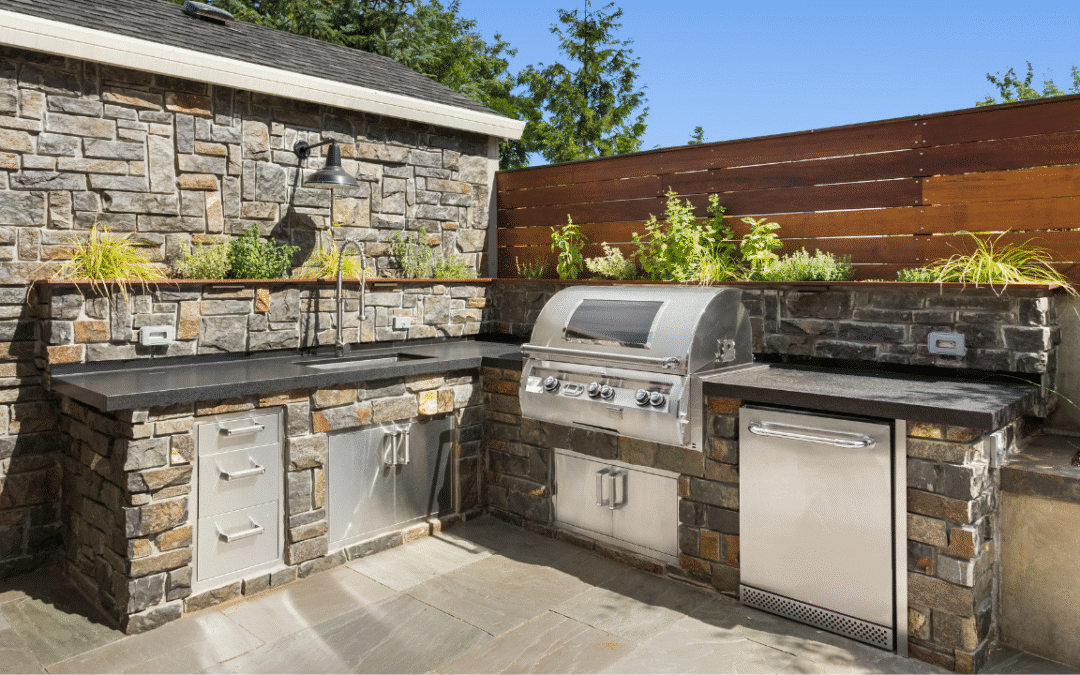
Outdoor kitchens have become one of the most popular home upgrades in recent years. From built-in grills and refrigerators to TVs, patio heaters, and lighting, homeowners are turning their backyards into fully functional entertainment centers.
But one thing many people underestimate is how much electrical planning an outdoor kitchen actually requires.
It’s easy to focus on countertops, appliances, and layout while overlooking the power needs behind everything. Outdoor kitchens use more electricity than homeowners expect, and failing to plan properly can lead to overloaded circuits, inconvenient outlet placement, costly changes mid-project, or safety issues down the road.
Before construction begins, it’s important to think through the electrical side of the project to make sure your outdoor space is safe, functional, and built to last.
Outdoor Kitchens Use More Power Than You May Think
Outdoor kitchens aren’t always a simple grill setup.
Many homeowners are adding features like:
- Outdoor refrigerators
- Pellet grills or smokers
- Pizza ovens
- Ice makers
- Outdoor lighting
- Outdoor TVs
- Patio heaters
- Sound systems and speakers
- Beverage coolers
- Charging stations and small appliances
Each of these additions increases the electrical demand on your home. Once several appliances are running at the same time, the power usage adds up quickly.
For example, a refrigerator cycling on while a patio heater, grill, lighting system, and television are all running can place a significant load on your electrical system.
That’s why electrical planning should happen before construction starts, not after the patio is already built.
What Needs a Dedicated Circuit?
One of the most important parts of designing an outdoor kitchen is determining which appliances need dedicated circuits.
A dedicated circuit is an electrical line that serves only one appliance or device. This prevents circuits from becoming overloaded and helps reduce the risk of tripped breakers or damaged equipment.
Outdoor appliances like refrigerators, pellet grills, pizza ovens, and patio heaters often require their own circuits because of the amount of power they draw.
This becomes even more important in older homes, where electrical systems may already be operating near capacity.
Without proper circuit planning, homeowners may experience:
- Frequent breaker trips
- Flickering lights
- Overloaded circuits
- Reduced appliance performance
- Potential safety hazards
Installing dedicated circuits during construction is far easier and more cost-effective than trying to add them after the outdoor kitchen is complete.
Outdoor Electrical Work Must Meet Code Requirements
Because outdoor electrical systems are exposed to weather and moisture, they must meet strict safety standards.
Outdoor kitchens require special considerations, like:
- GFCI protection
- Weather-resistant outlets
- Proper outdoor-rated wiring methods
- Waterproof covers and enclosures
- Correct grounding and bonding
- Permit and inspection requirements
GFCI (Ground Fault Circuit Interrupter) protection is especially important because it helps prevent electrical shock in wet environments. These outlets automatically shut off power if an unsafe condition is detected.
Outdoor electrical work should never be treated the same as indoor wiring. Improper installation can create serious safety risks and may also fail inspections or violate local code requirements.
Working with a licensed electrician helps ensure the installation is safe, compliant, and built for long-term reliability.
Planning Outlet Placement Early Saves Headaches Later
One of the biggest mistakes homeowners make is not thinking through outlet placement early enough.
Before construction begins, consider how the space will actually function day to day.
Think about:
- Where food prep will happen
- Where appliances will sit
- Seating and entertaining areas
- Future upgrades or additions
- Convenience for charging devices or plugging in small appliances
Strategically placing outlets will improve functionality and appearance. Because, let’s be honest, nobody wants extension cords running across a patio during a gathering.
Lighting Makes a Bigger Difference Than You Think
Outdoor lighting plays a major role in both the functionality and atmosphere of an outdoor kitchen.
A well-designed lighting plan can improve safety, visibility, and the overall experience of the space.
Common outdoor kitchen lighting upgrades include:
- Task lighting for cooking and prep areas
- Patio and overhead lighting
- Pathway and step lighting
- Accent lighting for landscaping or stonework
- Under-counter or cabinet lighting
Layering different types of lighting helps create a space that feels inviting, but is also practical after sunset.
Can Your Electrical Panel Handle the Extra Demand?
Outdoor kitchens add another layer of electrical demand to your home, and not every electrical panel is prepared to support it.
If your home already has major electrical loads like:
- EV chargers
- Hot tubs
- Heat pumps
- Workshops or large appliances
…your panel may already be close to capacity.
In some cases, adding an outdoor kitchen may require a panel upgrade or service upgrade to safely handle the additional load.
A licensed electrician can evaluate your current system, determine available capacity, and recommend the safest solution before construction begins.
Planning Ahead Makes the Entire Project Smoother
An outdoor kitchen is a major investment, and proper electrical planning helps protect that investment from unnecessary issues later. Thinking through dedicated circuits, outlet placement, lighting, code requirements, and panel capacity early can save time, reduce costs, and help prevent frustrating changes during construction.
At Electrical Outfitters NW, we help homeowners across Pierce County plan for these details before they become problems. Whether you’re adding a simple outdoor cooking space or building a fully customized backyard setup, our team can help make sure your electrical system is safe, functional, and built to support the way you actually use your space for years to come.
Posted on August 15, 2024 | Published by Ignite Local | Related Local Business