Choosing Home Backup Power Before Windstorm Season
As we get closer to the winter months here in the Pacific Northwest, the steady rain and wind set in. November is typically when our strongest storms arrive, and it doesn’t take much to bring down a tree limb and knock out power for a day or more, which is why home backup power is worth planning for now.
An outage can mean no heat, a warming refrigerator and freezer, no internet or TV and, for homes on a well, no running water. Now is the perfect time to put a plan in place, before those dark days and windstorms begin.
If you’re considering backup power for your home, here are some tips on how to choose the right size generator, and the three most common options available.
Choosing the Right Size Generator
When it comes to generators, bigger isn’t always better. An oversized generator means paying for power you’ll never use, and one that’s too small may not run everything you need during an outage. The right size depends on your home’s electrical demand and what you want to keep running.
Start with what you want to power. Some homeowners may only need the essentials until the power comes back on, such as:
- Refrigerator and freezer
- Furnace
- Well pump or sump pump
- Internet router
- Medical equipment
- A few lights and outlets
Others prefer whole-home backup, so life goes on as usual during an outage, including heating and cooling, kitchen appliances, laundry, an electric water heater and home office equipment. The more you want running at once, the larger the generator needs to be.
Account for how appliances use power. Every appliance needs running watts to keep operating, but those with motors, like refrigerators, well pumps, sump pumps and air conditioners, need a short burst of extra power, called starting watts, when they first turn on. That’s why adding up the wattage on appliance labels doesn’t always give an accurate answer.
Consider your home, not just its size. Two homes with similar square footage can need very different generators. A home with a gas furnace and gas water heater may need much less backup power than one where everything is electric, while an EV charger or a larger HVAC system adds to the load.
Get a professional load calculation. An electrician looks at your electrical panel, existing circuits, peak usage and any future plans for your home. The goal is a generator that reliably covers what you need, without paying for capacity you won’t use.
Options Available
Standby Generator: Hands-Off Protection
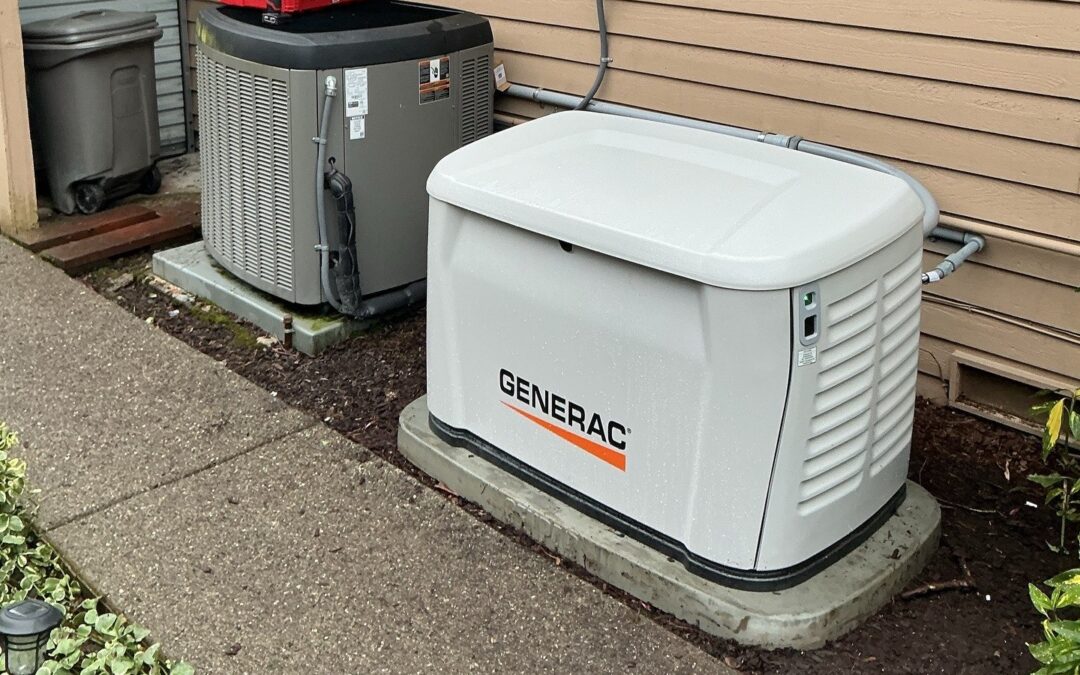
A standby generator is permanently installed outside your home and runs on natural gas or propane, so there’s no fuel to haul during an outage. It connects to your electrical system through an automatic transfer switch. When the power goes out, the transfer switch senses it, the generator starts on its own, and your home switches over within seconds, whether you’re home or not. When utility power returns, it switches back and shuts down.
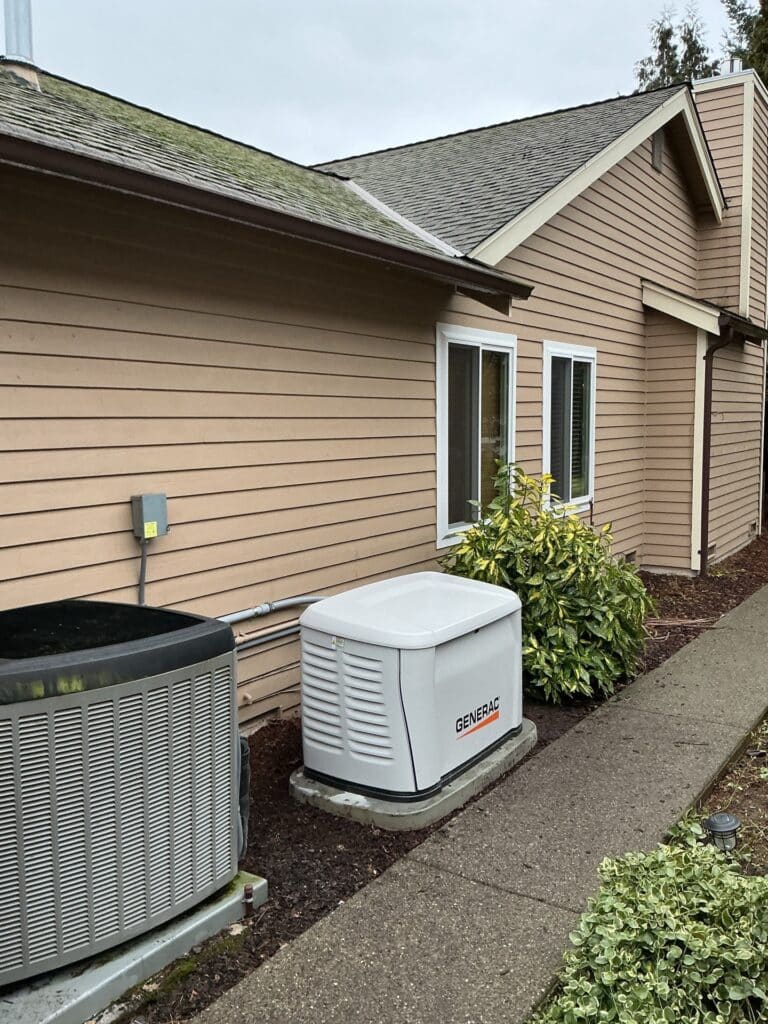
A standby generator is a good fit if:
- You want backup power without lifting a finger
- You’re often away from home during the winter
- Someone in your home relies on medical equipment
- You have a well pump, sump pump or other systems that can’t sit idle
- You want to power your whole home, or a large share of it
We sell and install Generac standby generators and handle the warranty paperwork on the units we sell. If you’ve already purchased a generator elsewhere, such as a Generac or Honeywell unit from Costco, we can install those as well, including the electrical work and gas piping. In that case, the warranty stays between you and the manufacturer.
Many newer Generac standby generators offer Wi-Fi monitoring through a smartphone app. You can confirm your generator is ready to run, check the oil level and battery voltage, see that it’s connected and track run hours no matter where you are.
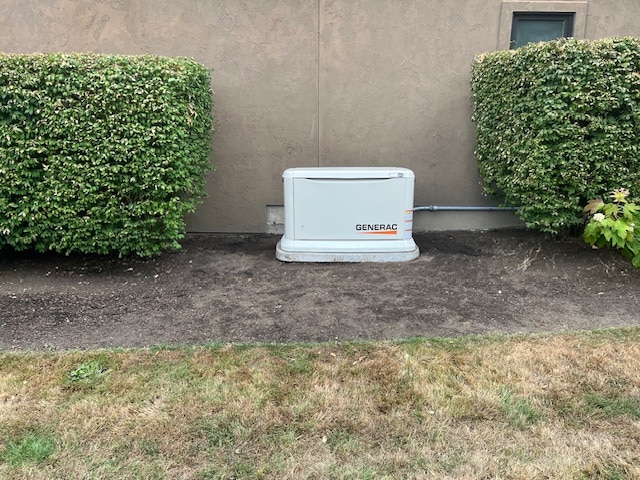
Escaping storm season for somewhere warm? You don’t have to worry about your home when the storms set in. If the power goes out while you’re away, the generator starts on its own, and you can check from your phone that it’s keeping your heat on, your refrigerator cold and your sump pump running. If something needs attention, you’ll know about it right away instead of coming home to a surprise.
Portable Generator With an Interlock Kit: A Budget-Friendly Middle Ground
If you already own a portable generator, or want a lower-cost option, an interlock kit lets you use it to safely power circuits in your home.
Here’s how the setup works:
- A power inlet box is installed on the outside of your home
- A generator breaker is added to your electrical panel
- A metal interlock plate is mounted on the panel so the main breaker and generator breaker can never be on at the same time
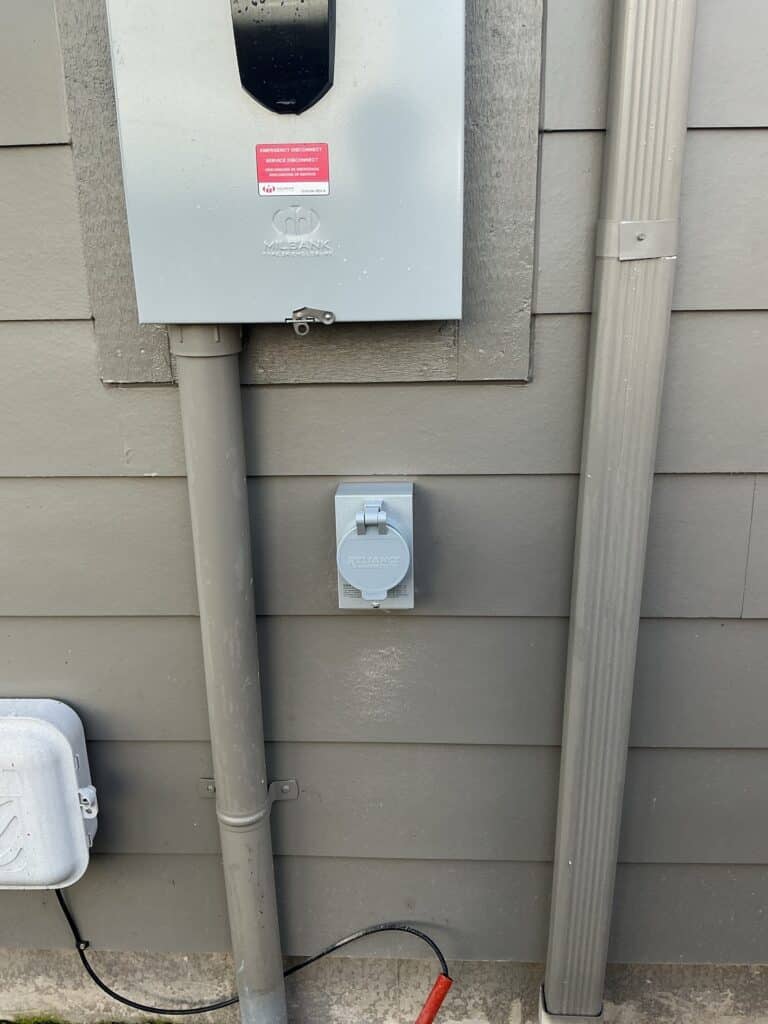
During an outage, you set the generator up outside, plug it into the inlet with a heavy-duty cord, start it and switch the breakers. From there, you choose which circuits to run, such as the refrigerator, furnace fan, lights and a few outlets.
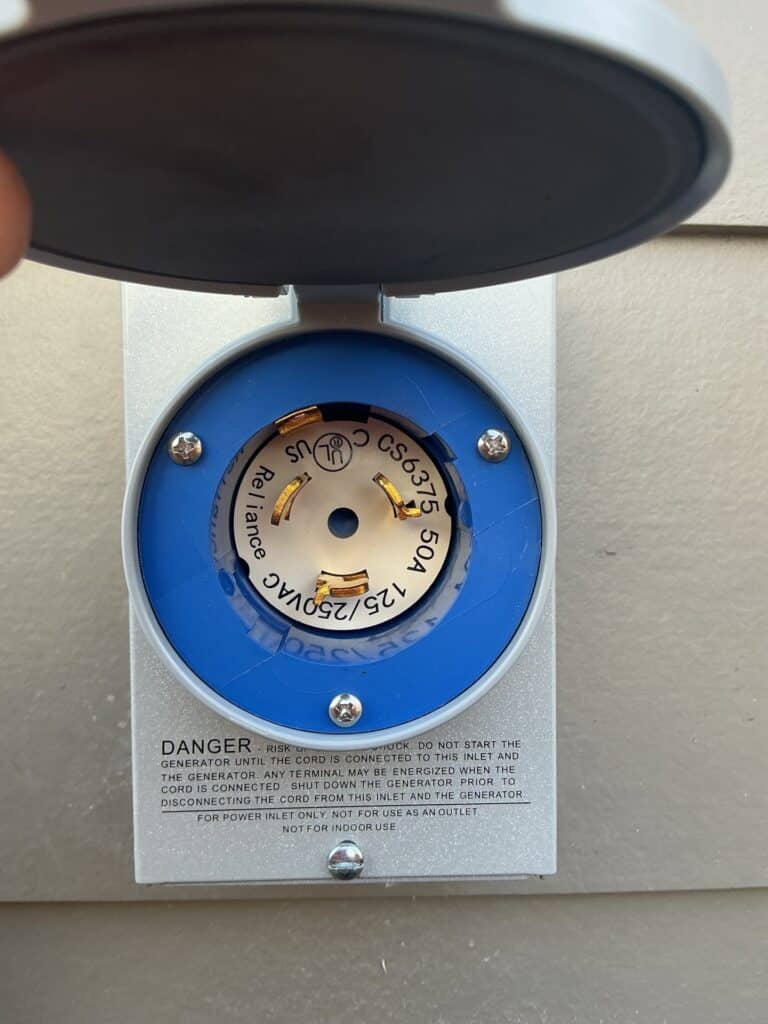
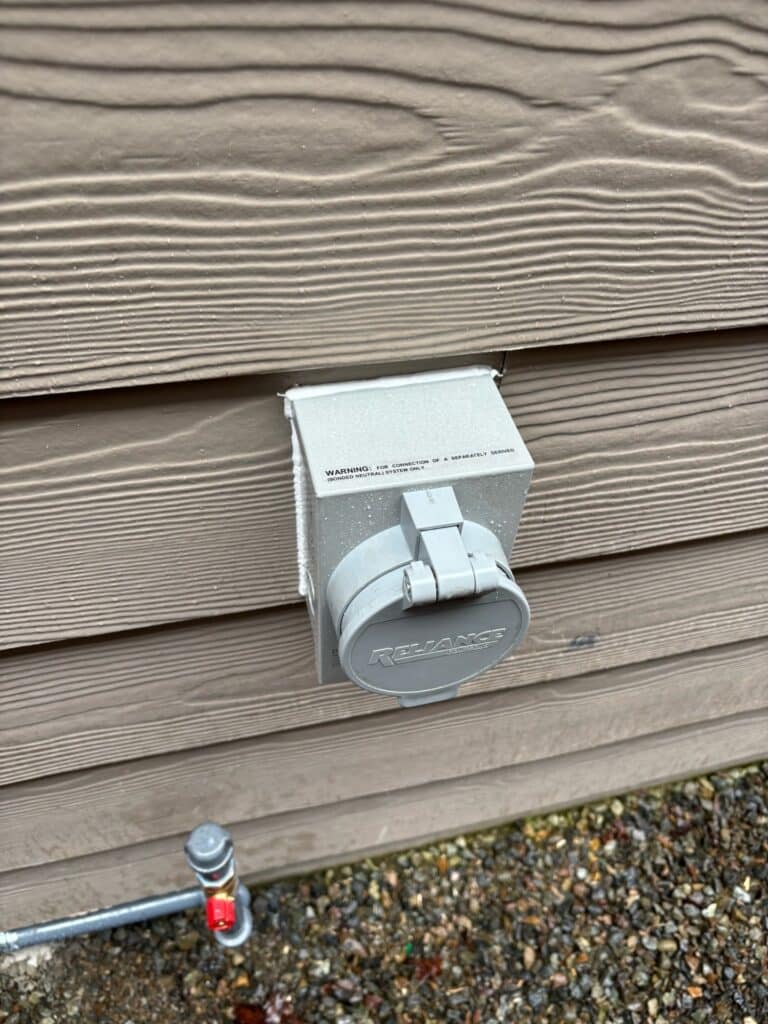
The interlock plate prevents backfeeding, which happens when a generator sends power back into the utility lines. Backfeeding can damage equipment and seriously injure the crews working to restore power. The Washington State Department of Health warns against ever powering house wiring by plugging a generator into a wall outlet. A permitted interlock and inlet, installed by a licensed electrician, are a safe way to connect.
Keep in mind that a portable setup is manual. Someone needs to be home to start the generator, and it will need regular refueling during a long outage.
Driving a Ford F-150 Lightning? We can also set up a connection that lets the truck’s built-in power supply back up your home.
Home Battery Backup: Quiet, but Limited
Home battery systems have become a popular backup option. They store electricity from the grid or from solar panels and switch on automatically when the power goes out. There’s no fuel, no engine noise and no exhaust.
The trade-off is capacity. A battery can keep essentials running for a limited time, but a multi-day outage can outlast its charge, especially during the darker winter months when solar panels have limited sun to recharge them. Powering a whole home usually takes multiple batteries, which adds significant cost. Batteries work best for short outages or as one part of a larger plan.
Whatever system you consider, have a licensed electrician confirm your electrical panel can support it.
Which Option Is Right for You?
- Standby generator: automatic, whole-home protection that can run for days on natural gas or propane
- Portable generator with an interlock kit: a lower-cost, manual option for your essential circuits
- Home battery: quiet, fuel-free backup for shorter outages
The right choice depends on how long outages tend to last where you live, what you need to keep running and whether someone will be home to manage the equipment.
Your October Home Backup Power Checklist
- Schedule generator installation early. Permits, inspections and a load calculation take time, and booking before the first major storm means your system is ready when you need it.
- Service your standby generator. Annual generator maintenance, including oil, filters, battery and a test run, helps make sure it starts when the power goes out.
- Test your portable generator. Start it, inspect the cord and keep fresh fuel with stabilizer on hand.
- Check your carbon monoxide alarms. Test them and replace the batteries as needed. Never run a portable generator in a garage, carport or basement, and keep it at least 20 feet from your home.
- Know your setup. Make sure everyone in your household knows how your interlock or transfer switch works.
Get Your Home Ready Before the Wind Picks Up
Whether you want a standby generator that takes care of itself or a simple interlock setup for your portable generator, our team at Electrical Outfitters NW can help you choose the right backup generator for your home. We serve homeowners throughout Pierce County and handle permits and inspections, so your system is installed safely and to code. Contact us to schedule your generator installation before November’s storms arrive.